Course Objective:
The main objectives of an initial digitalization training in this area can focus, first of all, on introducing future professionals to the use of basic digital tools to improve management and operational efficiency.
The initial digitalisation also seeks to strengthen the sustainability, traceability and competitiveness of the sector, promoting the use of digital platforms that allow processes to be certified, the value chain to be controlled and logistics to be improved. According to regional initiatives, digitalization also contributes to establishing employment in rural areas and strengthening the bioeconomy, promoting more responsible production practices aligned with the digital transition. These objectives respond to the need for companies in the sector to adapt to an increasingly technological and globalised market, and to incorporate tools that facilitate both administrative procedures and internal management
Main ideas:
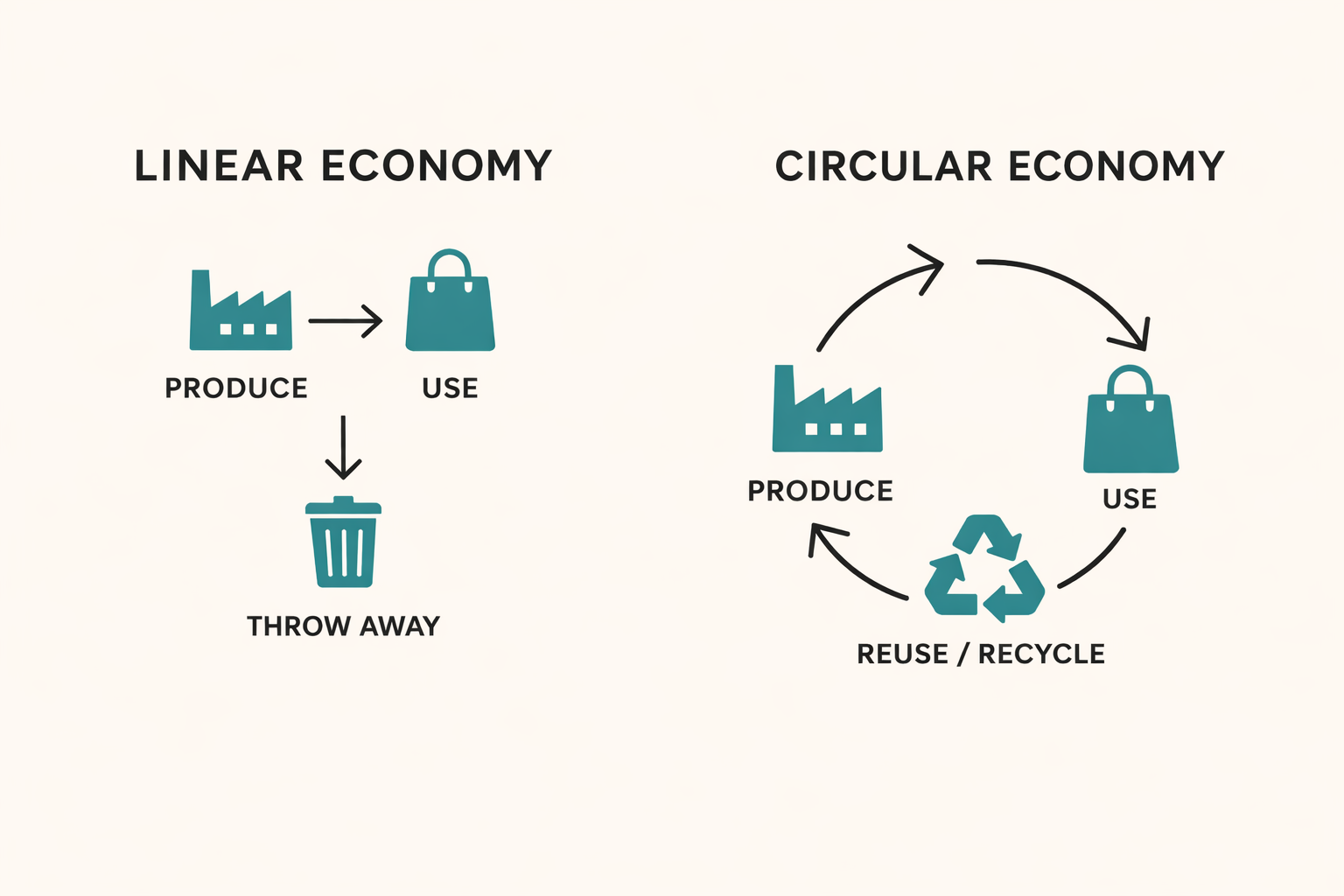
- Clearly distinguish between circular economy and linear economy.
- Basic concepts of the 4th industrial revolution.
- Cloud Basics
- Digital Enabling Technologies (THT) Basics
Course Features
- Lectures 29
- Quizzes 5
- Duration 10 weeks
- Skill level All levels
- Language English
- Students 0
- Certificate No
- Assessments Yes
Curriculum
- 6 Sections
- 29 Lessons
- 10 Weeks
- Fundamentals of Linear Economy (LE) and Circular Economy (CE) in the wood, furniture and cork sector6
- 1.1Typical stages of LE and CE-based models and impact on the environment
- 1.2Recovery of recycling in the economic models of the wood, furniture and cork sector. Impact on the environment
- 1.3Identification of real LE processes in the wood, furniture and cork sector
- 1.4Identification of real CE processes in the wood, furniture and cork sector
- 1.5Comparison of economic models in relation to their environmental impact and the SDGs (Sustainable Development Goals)
- 1.6Fundamentals of Linear Economy (LE) and Circular Economy (CE)8 Questions
- 4th Industrial Revolution in the wood, furniture and cork sector (Changes, advantages, disadvantages)6
- 2.1Introduction and basic foundations of the 4th Industrial Revolution
- 2.2Cyber-physical Systems in the Industrial Revolution. Changes produced by automatic systems in the wood, furniture and cork sector.
- 2.3Relationship between the physical part of the industry and software (IoT), communications… in the wood, furniture and cork sector
- 2.4Interrelation between the physical and virtual worlds. Improved results with the migration to 4.0 environments in the wood, furniture and cork sector
- 2.5Advantages for customers and companies in the wood, furniture and cork sector
- 2.6Industry 4.0 in the wood-furniture-cork sector8 Questions
- Cloud/Cloud-Based Systems5
- 3.1Basic fundamentals of cloud computing in the wood, furniture and cork industry
- 3.2Structure and levels of Cloud Computing in the wood, furniture and cork industry
- 3.3Basic fundamentals of edge computing, fog and mist in the wood, furniture and cork sector
- 3.4Advantages of the cloud in connected systems in the wood, furniture and cork sector
- 3.5Cloud Computing and Edge/Fog/Mist in the wood-furniture-cork sector8 Questions
- Digitalised production/service delivery systems in the wood, furniture and cork sector7
- 4.1Digital Enabling Technologies (DET) in wood, furniture and cork sector
- 4.2Characteristics and application of IoT, AI, BIG Data, 5G technology, collaborative robotics, Blockcahin, cybersecurity, virtual reality, additive manufacturing, (among others) in the wood, furniture and cork sector
- 4.3Contribution of DET to improving productivity and efficiency in the wood, furniture and cork sector
- 4.4Contribution of DET to reducing costs and improving competitiveness in the wood, furniture and cork sector
- 4.5Relationship of disruptive technologies with specific applications in the wood, furniture and cork sector
- 4.6Basic introduction to unconventional data storage systems in the wood, furniture and cork sector
- 4.7Digital technologies in wood, furniture and cork sector8 Questions
- Transformation plan from a company based on Linear Economy to Circular Economy in the wood, furniture and cork sector8
- 5.1Block definition of the company’s operating diagram in the wood, furniture and cork sector
- 5.2Analysis and identification of digitisable stages in the wood, furniture and cork sector
- 5.3Relationship of digitized stages with the business system in the wood, furniture and cork sector
- 5.4Elaboration of a block diagram of the digitized system in the wood, furniture and cork sector
- 5.5Feasibility report and improvements introduced – Wood, furniture and cork sector
- 5.6Analysis of the improvement of the production and management of waste in wood, furniture and cork.
- 5.7Preparation of the sequencing document of the transformation plan and the resources used in wood, furniture and cork
- 5.8EL- EC Transformation in the wood, furniture and cork sector8 Questions
- To know more2